
Wild swings in Canadian vehicle sales are continuing into 2026, with gains concentrated in practical segments while luxury vehicles lose ground, a shift with clear implications for the aftermarket.
The trend of pronounced segment-level volatility carried through the first quarter, led once again by the small van category.
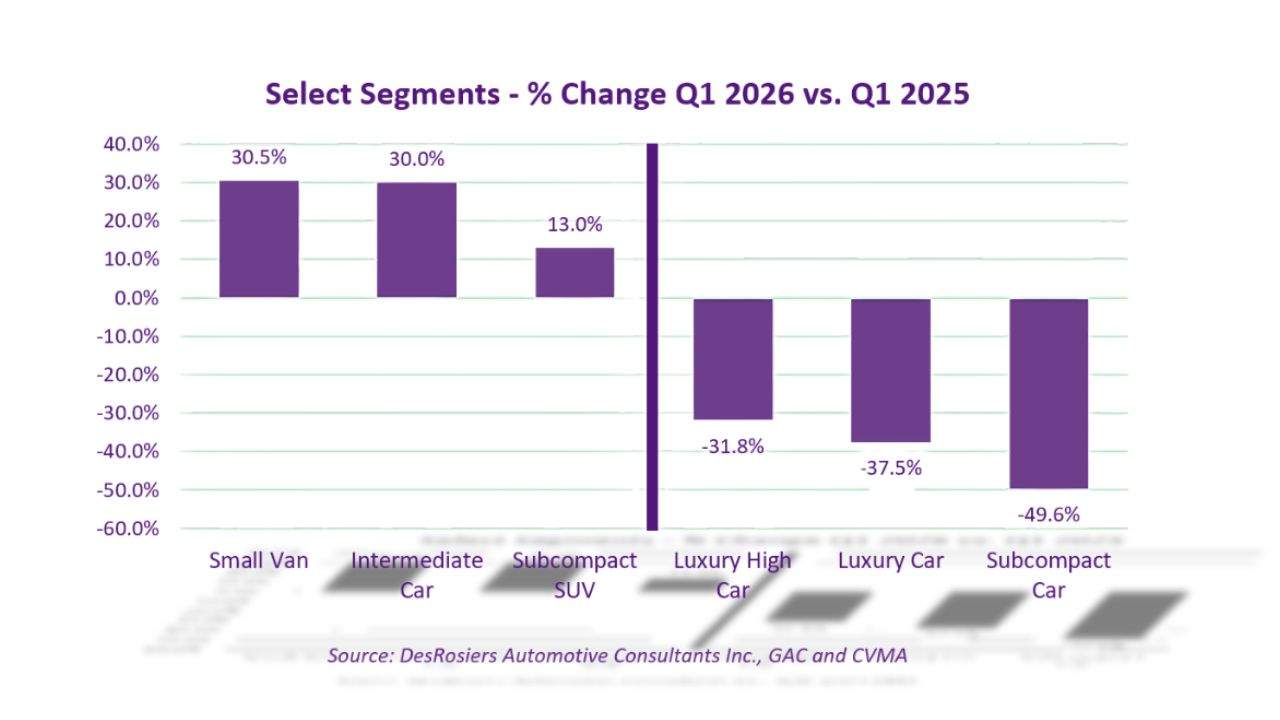
Sales in the segment rose 30.5% year over year, building on already strong gains in 2025. For aftermarket professionals, that signals a growing parc of high-utility vehicles, typically tied to commercial use, driving demand for maintenance, wear-and-tear components, and service frequency.
The intermediate car segment followed closely, up 30.0%, with increased volumes from models like the Toyota Prius and Camry. Meanwhile, subcompact SUVs, led by vehicles such as the Nissan Kicks, posted a 13.0% increase.
Together, these gains reinforce a broader shift toward value-oriented, fuel-efficient vehicles, which tend to stay in service longer and generate steady aftermarket demand.
At the opposite end of the spectrum, luxury segments saw steep declines.
Luxury high and luxury car categories dropped 31.8% and 37.5%, respectively, compared to the first quarter of 2025. While these segments represent a smaller share of overall vehicle population, they typically contribute higher-value service work, making the downturn notable for shops with a premium customer base.
The subcompact car segment, already in decline, fell a further 49.6%, exacerbated by the exit of the Mitsubishi Mirage. Even with continued interest in models like the Fiat 500e, the shrinking footprint of entry-level cars reflects an ongoing structural shift in the market.
“The performance of the luxury market in 2026 will be an area of real interest,” said Andrew King, Managing Partner of DAC. “With the Canadian economy facing pressures from trade issues as well as high gas prices, the impact on different market segments will be fascinating to track.”
For the aftermarket, the takeaway is clear: growth is concentrating in practical, high-use vehicle segments, while higher-end categories soften under economic pressure.
That mix shift points to sustained demand for core maintenance and repair continues to evolve.
0 Comments