
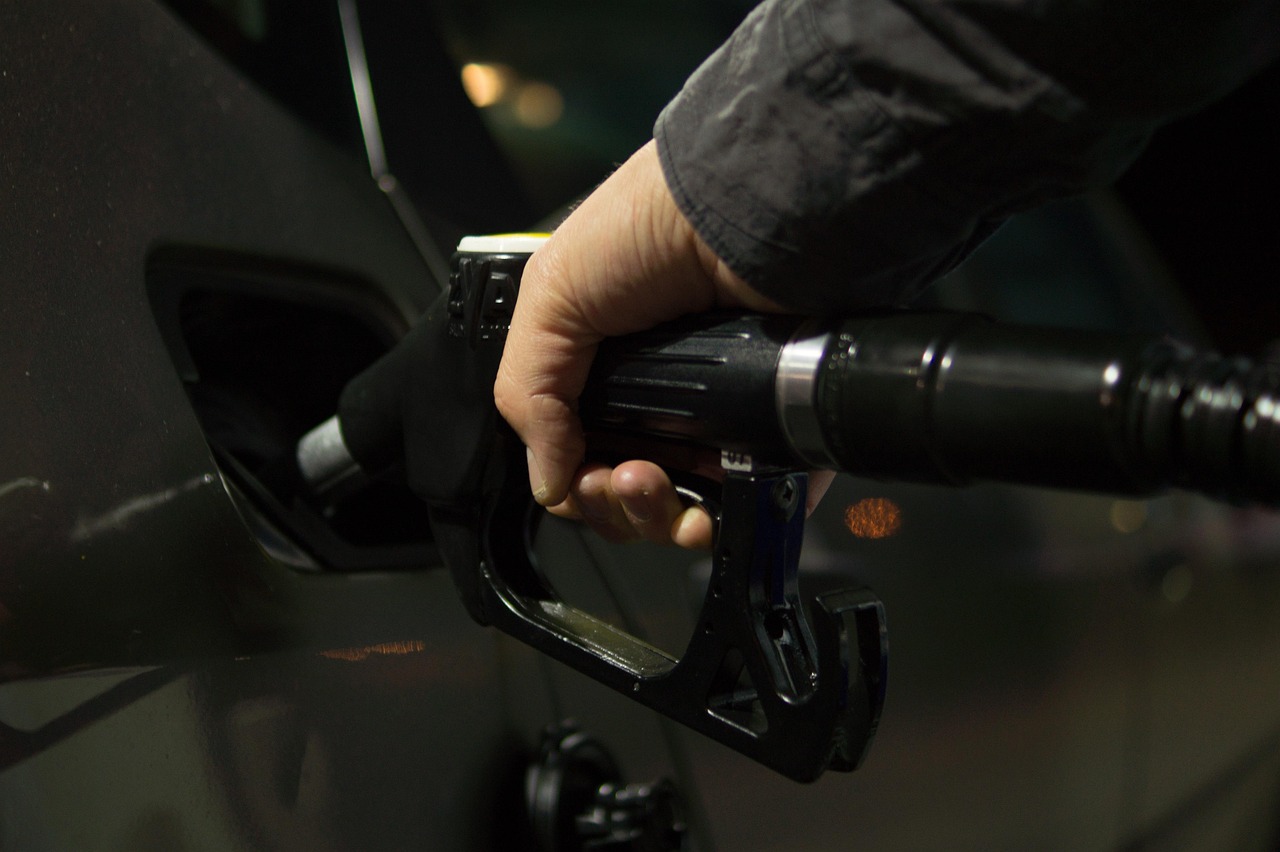
You don’t have to be a statistician to understand that the impact of rising gas prices on consumer behaviour is a lot more about psychology than pure household budget realities.
But that doesn’t mean the impact isn’t real.
Of course, it’s not all psychology. For anyone who drives, the pain at the pump can be real.
Gas prices in Canada have risen by approximately 30% since late February 2026, driven by geopolitical tensions in the Middle East, with national averages exceeding $1.82 per litre by early April. Regional prices vary, with some areas in Newfoundland and Labrador surpassing $2.00 per litre.
But the emotional reaction is often out of proportion to the actual cost increase of a few tens of dollars: people skipping meals, avoiding driving altogether, parking second vehicles. And yes, cries for politicians to “do something about it.”

Publisher and Director of Content
AndrewRoss@JobberNation.ca
At least that what you might see on the evening news. But the implications in real terms are much more muted, at least in terms of the impact on driving habits.
It is also true that the price at the pump is not the only area of current economic pressure, but looked at in isolation reveals some interesting insights.
A 2016 study by Sina Motamedi, Transportation Economics Office, Ontario Ministry of Transportation looked in depth at the effects.
“We find that the elasticity of vehicle-kilometers travelled in Ontario with respect to the price of gasoline is within the range of -0.07 and -0.16, and our preferred model yields an elasticity of -0.12,” writes the author.
In plain language, what this means is that as gas prices go up, people tend to drive a bit less, but not a lot. More specifically, they found that the data collected showed about a 1.2% drop in km driven for a 10% hike in price at the pump.
Putting into current terms, the current price spike would equate to about a 3.6% drop in km driven.
(There’s another interesting finding about fuel economy in that study that I’ll get to later).
Findings from a U.S. study that looked at a variety of factors affecting driving habits (like road conditions and the impact of changing driving habits on neighbouring states) found similar, if slightly larger results (a 2.2% drop in driving mileage for a 10% gas price hike.)
Of course, there can be a short-term reflex response when prices rise quickly alongside more extensive economic uncertainty. In times of uncertainty people do tend to hold onto their dollars, especially those judged to be discretionary.
Drivers are likely to change some driving habits quickly and relatively extremely according to multiple studies, but that doesn’t hold over the long term.. Most people’s driving is not discretionary and even carpooling and combining trips or parking a less-fuel efficient household vehicle tends to only last over the short term.
Over the medium term, driving habits do change—less aggressive driving, more careful on road behaviour, more attention to fuel-efficient driving habits—and will add to the ongoing pressure to maintain a vehicle rather than replace it.
That last point of course plays into the aftermarket, even if the slight change in overall driving might push out maintenance intervals.
Other data points to an increase in concern over fuel mileage related service and diagnostics, and an overall rising concern over preventative maintenance as the imperative to keep an aging vehicle on the road rises.
Aftermarket professionals may not find these assertions surprising—though it’s good practice to test assumptions against real data—but there were two unexpected findings:
• Economic uncertainty causes a rise in collisions
• When consumers do change vehicles and opt for a more fuel-efficient option, kilometers driven goes up.
As detailed in the 2018 study “The short-term impact of economic uncertainty on motor vehicle collisions” which looked at Great Britain over the period 2005–2015, “A spike in the daily economic uncertainty index was associated with an immediate increase in the number of motor vehicle collisions. Results were robust to various sensitivity analyses. Overall, daily increases in economic uncertainty are associated with short-term spikes in motor vehicle collisions.”
Further to this, it’s important to emphasize the daily (ahem) impact. As noted in the abstract to the study—which paid particular attention to the period following the 2008 global financial crisis “the number of motor vehicle collisions increased during the first and second day following the announcement of austerity measures in Greece, before returning to previous levels.”
Put bluntly, people who are stressed, distracted, and maybe sleep deprived, are more apt to get involved in collisions.
Circling back to the daily driving habits, it seems that once consumers do make the choice to buy a new vehicle, higher fuel costs can weigh heavily on the decision, which is not surprising. But what is surprising to many is that with the reduced fuel consumption of their new drive at hand, they up their driving habits rather than keep retain their cost saving habits.
This has been called “The Rebound Effect.”
The Ontario study found this to be the case as did an additional meta-analysis of 74 studies from Europe and the U.K. , in the short-term people increase driving around 10–12% and 26–29% in the long run as they settle into the new, lower cost of driving. An additional study of U.S. behaviour showed similar impacts.
It seems fitting to note that in Canada (and virtually everywhere else outside the U.S.) EV drivers consistently outpace ICE drivers in kilometers-driven.
And of course, more driving means more service demand.
In the end, it would seem that while the initial shock of a big increase in fuel prices might lead to a very short-term softening in demand and while some individual customers may be particularly hard hit, for the aftermarket at large the impact is small and fleeting and not necessarily all negative.
Over the medium and long term, the impacts on service habits, car ownership decisions and driving habits play strongly into the aftermarket’s strengths.
0 Comments