

Local Strength, National Voice
As CEO of Fountain Tire, the AIA Canada Chair has seen firsthand the importance of local decision-making as a foundational strength across the aftermarket.
One of the defining characteristics of Canada’s automotive aftermarket is how deeply it is rooted in local communities. Across nearly 10 million square kilometres, success is built at the ground level. Whether it is a single-bay shop, a regional, national, or even global operation, performance ultimately comes down to how well businesses connect with their customers and communities.
That reality shapes not only day-to-day operations, but also the broader priorities of the industry. As Jason Herle prepares to take on the role of Chair of the Automotive Industries Association of Canada, he brings that perspective with him.
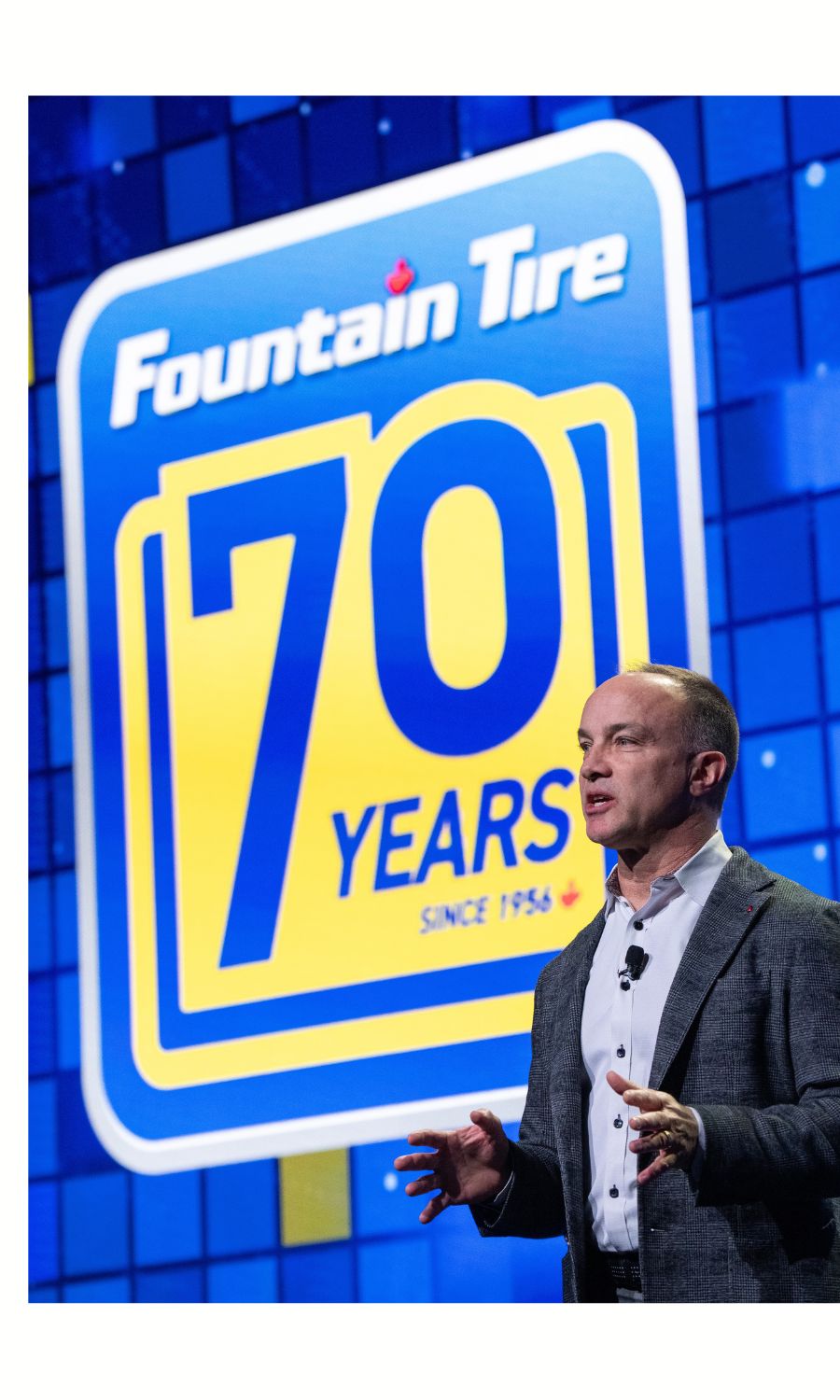
“It’s rare to see a 70-year run in this industry,” he says, referring to Fountain Tire’s milestone. “A lot of that comes down to the partnership model. Local operators are making decisions every day and adapting to what’s happening in their markets. That’s been a big part of the success.”
He describes the approach as a balance between structure and flexibility.
“There’s a framework in place, but there’s also local ownership,” he says. “That allows people on the ground to respond quickly to customers and changing conditions.”
That ability to adapt has become increasingly important as the pace of change accelerates across the industry.
“Being established doesn’t remove the need to evolve,” Herle says. “If anything, the pressure is greater now. Technology, training requirements, even customer expectations are all moving faster than they used to. That’s something every part of the aftermarket is dealing with.”
Those shifts are central to AIA Canada’s role as an industry advocate and connector.
Herle sees opportunity in that environment, particularly when it comes to addressing long-standing challenges like labour.
“There’s a real opportunity for the aftermarket to raise its profile,” he says. “We’re competing with other skilled trades for the same people, but we’re not always as visible.”
Improving that visibility, he adds, will require action on multiple fronts.
“If we want to attract talent, we have to make the case,” he says. “That includes better awareness, stronger engagement with the next generation, and yes, better compensation. At the same time, we need customers to understand the value behind what we do.”
That balancing act between cost and value is familiar to anyone in the channel, and it ties directly into one of the industry’s most persistent issues: Right to Repair.
“It’s been part of the conversation for years, and it’s not going away,” Herle says.
He points to the MNP Canada report Unlocking Access: Why Right to Repair Matters for Every Vehicle Owner as reinforcing the importance of the issue across both mechanical and collision sectors.
“The report shows that, while access to data may affect segments differently, it still matters across the board,” he says. “At the end of the day, this is about making sure Canadians have access to affordable and convenient repair options.”
For AIA Canada, that means continuing to push for progress, even if it comes incrementally.
“There’s been movement, especially in Quebec, and you’re seeing interest from other provinces,” Herle notes. “But until there’s a national framework, there’s still work to do.”
In the meantime, a regional approach may be the only practical path forward.
Not long after Herle spoke to Jobber Nation, Manitoba announced its Bill 15, which sets out a framework for industry-specific Right to Repair action.
“If progress happens province by province, that’s likely how it will unfold in the near term,” he says. “Longer term, the goal is still national consistency.”
The urgency is underscored by broader market conditions. Canada’s vehicle parc is aging, and higher vehicle prices are keeping cars on the road longer.
“That’s a real opportunity for the aftermarket,” Herle says. “But without the right access to data and tools, it becomes harder to fully support those vehicles and the customers who rely on them.”
Advocacy in that environment requires persistence and adaptability, particularly given the realities of the political landscape.
“You have to stay flexible and understand who the key stakeholders are,” he said. “Things can change quickly, and when they do, you need to be ready to move.”
That is where the collective voice of the industry becomes critical.
“The association can have an impact that individual companies simply can’t match,” Herle said. “Whether you’re a small independent or a larger organization, being part of that collective effort matters.”
It is also an area where engagement across the channel remains essential.
“We’re all focused on running our businesses day to day, so it’s easy for these issues to sit in the background,” he said. “But something like Right to Repair can have long-term implications if it’s not addressed.”
He credits AIA Canada with maintaining that focus on behalf of the industry.
“They’ve been consistent in representing the aftermarket, and that’s important,” he said.
The challenge, of course, is that the aftermarket is not the only voice at the table.
“We’re a $44 billion industry with hundreds of thousands of employees and millions of vehicles on the road,” Herle said. “There’s strength in that, but it still requires coordination. The OEMs are well-resourced, so it’s important for the aftermarket to work together.”
As he steps into the Chair role, Herle is clear about how he views the board’s responsibilities.
“The role of the board is governance and oversight,” he said. “New President and CEO Emily Chung and her team will set the direction and execute on strategy. Our job is to support that, ensure accountability, and keep the organization on track.”
That includes maintaining a strong focus on member value and engagement.
“The more involved people are, the more they’ll get out of it,” he said. “There are a lot of ways to participate, and those connections matter.”
For Herle, the decision to take on the role reflects both experience and a desire to contribute.
“At this stage in my career, it’s about giving back,” he said. “The aftermarket has been good to us, and supporting the broader industry is important.”
For Jobber Nation readers, the message is a familiar one, but it carries increasing weight.
The strength of the aftermarket starts locally, with relationships built in communities across the country. But the challenges it faces, from labour shortages to data access, require coordinated action at a national level.
That is where AIA Canada plays its role.
And as Herle steps into the Chair position, the focus is clear: ensuring the industry not only keeps pace with change but helps shape it.
This article also appeared in the March/April 2026 print edition of Jobber Nation. You can read the full DIGITAL FLIPBOOK HERE.
HEAR THE WHOLE CONVERSATION
0 Comments