
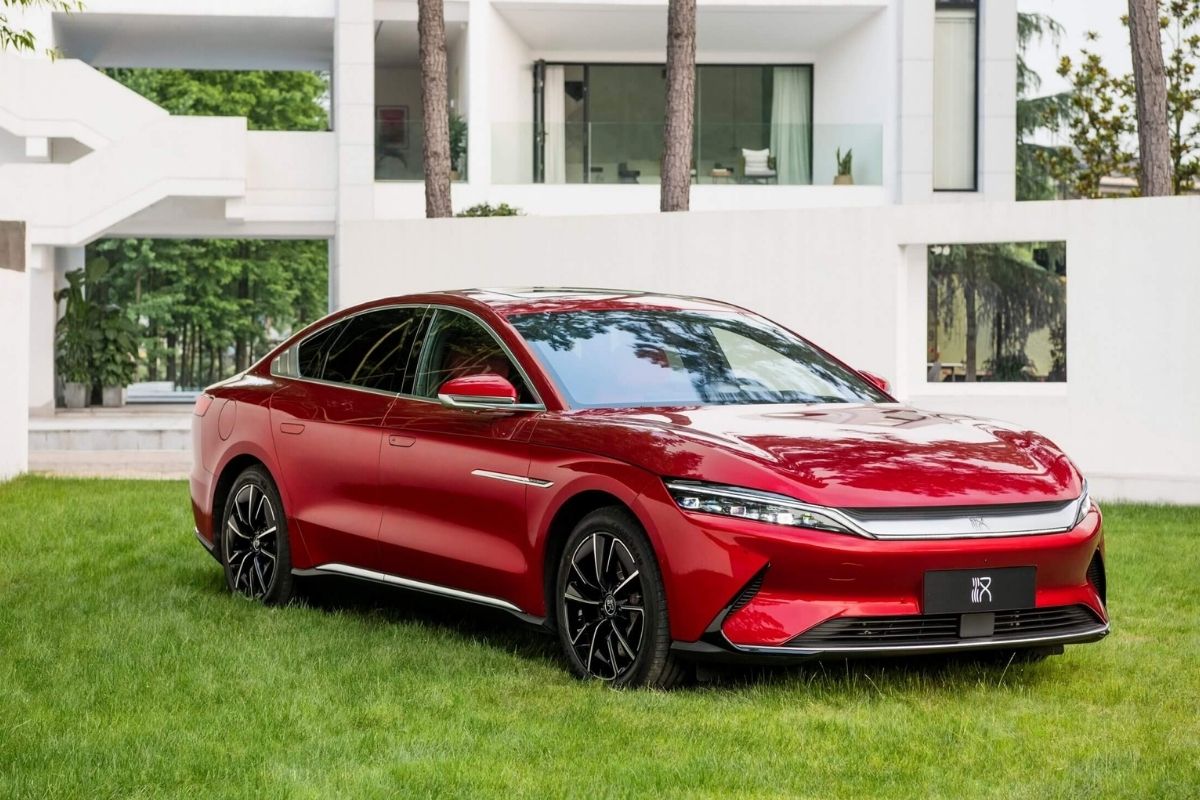
While the announced agreement is brand-agnostic, it can be anticipated that BYD–with it’s well developed international export and manufacturing footprint–will be among the first to land. BYD recently overtook Tesla as the world’s largest EV maker.
The Government of Canada has announced it will allow up to 49,000 electric vehicles from China to enter the Canadian market, a notable shift from the 100% tariff imposed in 2024.
That earlier decision was widely viewed as a parallel response to similar U.S. measures and triggered retaliatory tariffs on a range of Canadian agricultural and industrial exports.
The latest announcement rolls back many of those countermeasures, signalling a partial reset in trade relations.
In pure volume terms, the allowance is both modest and meaningful. Canadians purchased approximately 1.9 million vehicles in 2025, meaning the permitted imports represent less than three per cent of the new-vehicle market.
However, the context matters. EV adoption has cooled, with electric vehicles accounting for under 10 per cent of total sales last year as federal and provincial incentives expired.
Sales trends reinforce the uncertainty. Tesla, for example, sold roughly 55,000 vehicles in Canada in 2024, boosted by year-end incentive pull-forward, but saw sales fall to about 20,000 units in 2025. Affordability, infrastructure, and policy consistency continue to shape consumer demand.
According to a statement from Prime Minister Mark Carney’s office, the imported vehicles will be subject to Canada’s most-favoured-nation tariff rate of 6.1 per cent, aligning volumes with pre-trade-friction levels seen in 2023–2024.
The government also points to longer-term commitments tied to the agreement, including anticipated Chinese joint-venture investment in Canada within three years, aimed at supporting domestic manufacturing and EV supply-chain development.
“It is expected that within three years, this agreement will drive considerable new Chinese joint-venture investment in Canada with trusted partners to protect and create new auto manufacturing careers for Canadian workers, and ensure a robust build-out of Canada’s EV supply chain,” says a statement from the Prime MInisters’s office.
“With this agreement, it is also anticipated that, in five years, more than 50% of these vehicles will be affordable EVs with an import price of less than $35,000, creating new lower-cost options for Canadian consumers.”
And, while the announced agreement is brand-agnostic, it can be anticipated that BYD–with it’s well developed international exports–will be among the first to land. BYD recently overtook Tesla as the world’s largest EV maker.
For the aftermarket, the prospect of new brands in the market both presents opportunities and challenges—reinforcing the need for jobbers and shops to stay aligned with evolving powertrain mix and vehicle origins.
0 Comments